Architectural
Stainless Steel Products.
Explore seven product families for architectural openings, surfaces and interior spaces. Select a collection to review design options and the information needed for an enquiry.
7 collections
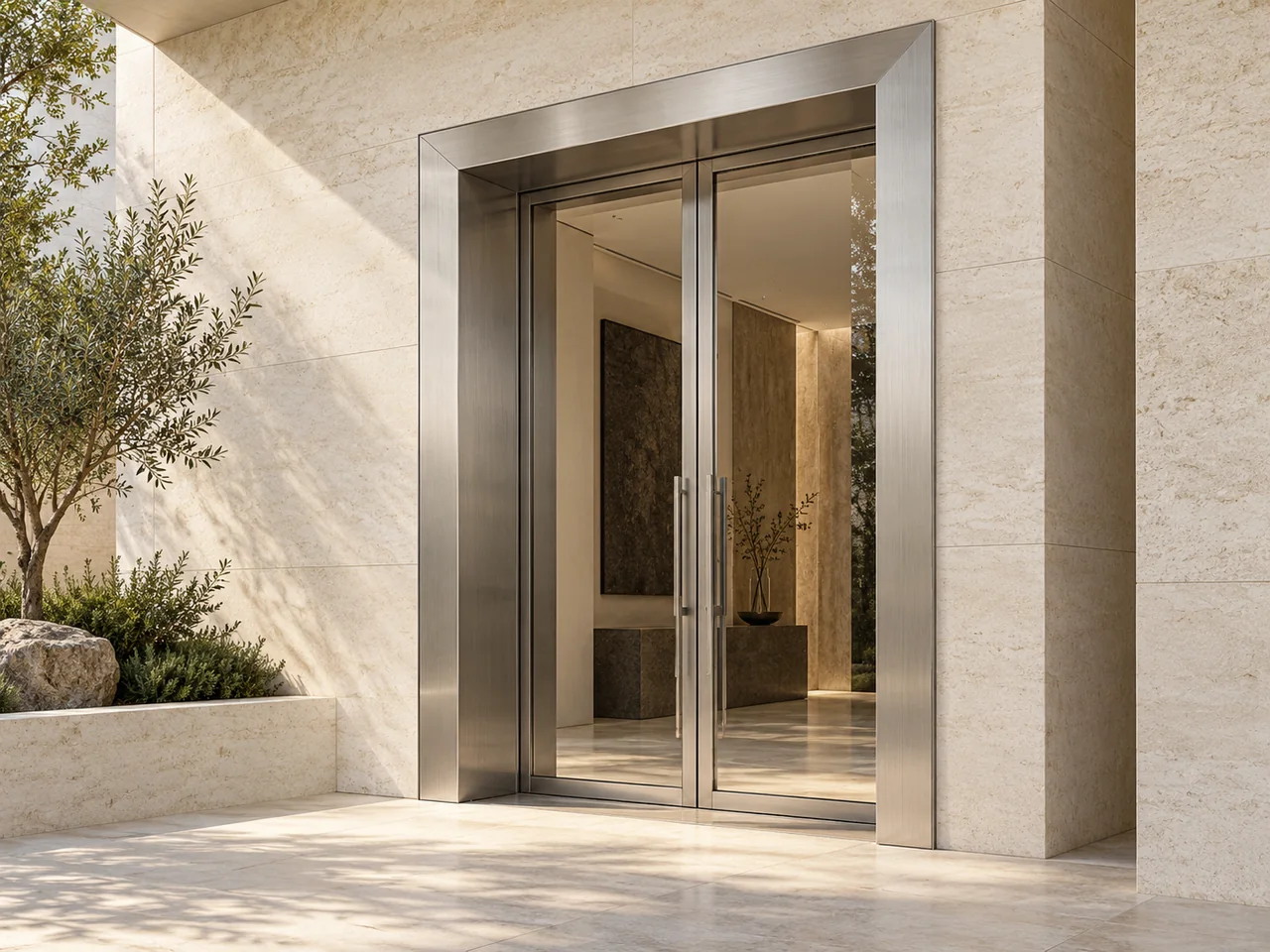 Concept Rendering
Stainless Steel Door Frames
Custom jambs, heads and frame configurations for a coordinated architectural opening.
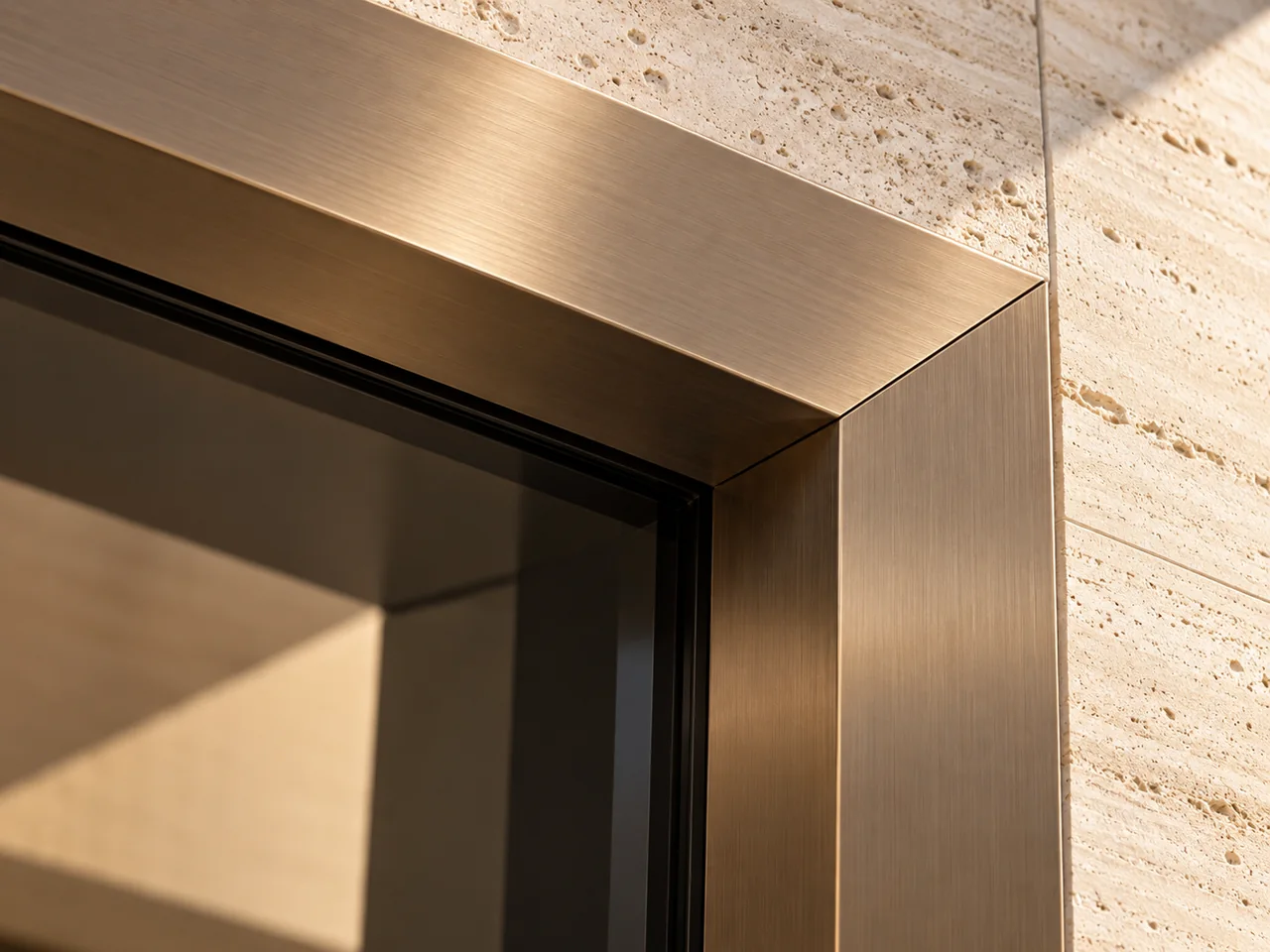 Concept Rendering
Stainless Steel Door Trims
Decorative edge trims and folded architraves for clean transitions around door openings.
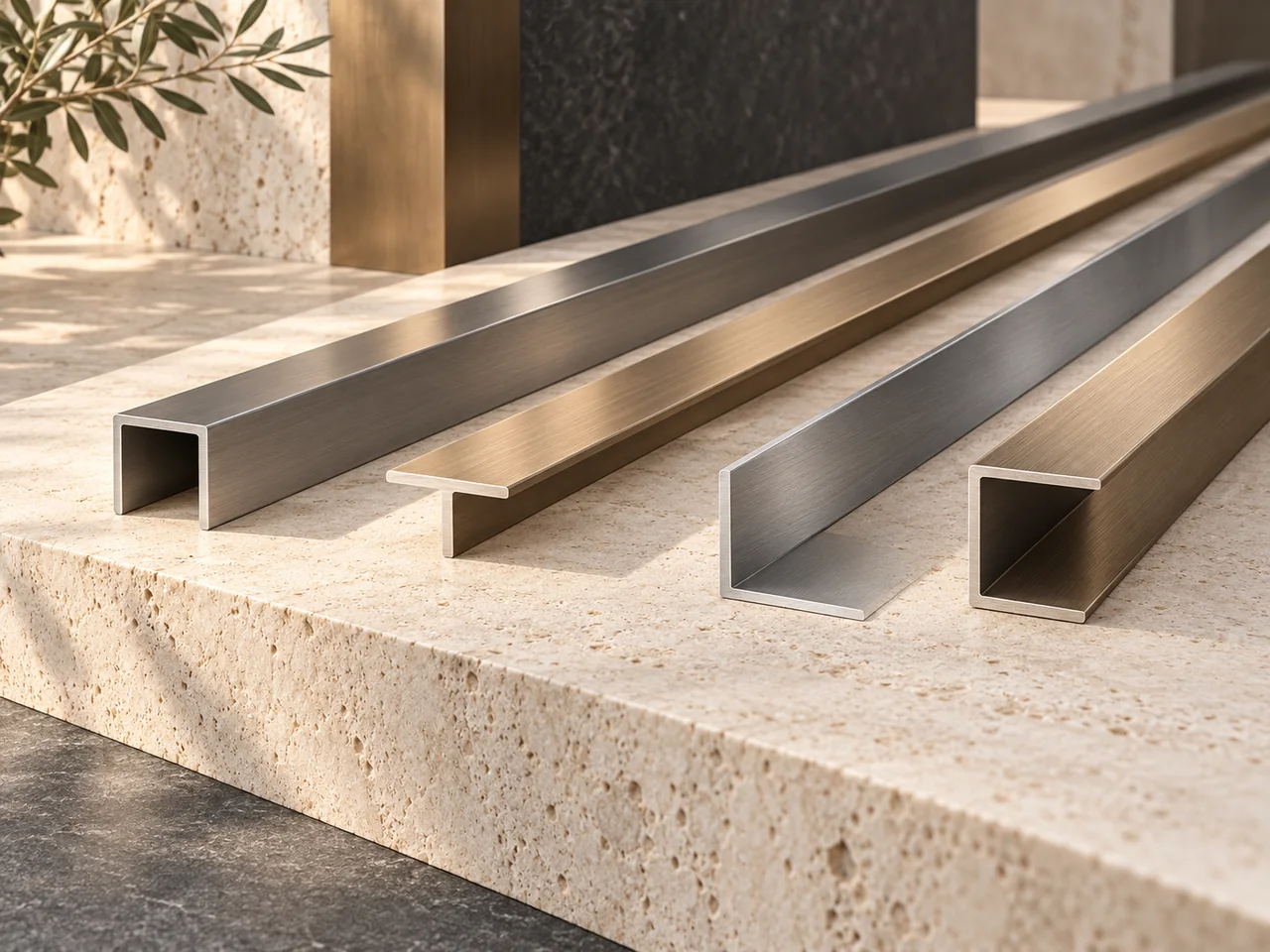 Concept Rendering
Decorative Stainless Steel Profiles
U, T, L and C section concepts for panel joints, edge details and decorative reveals.
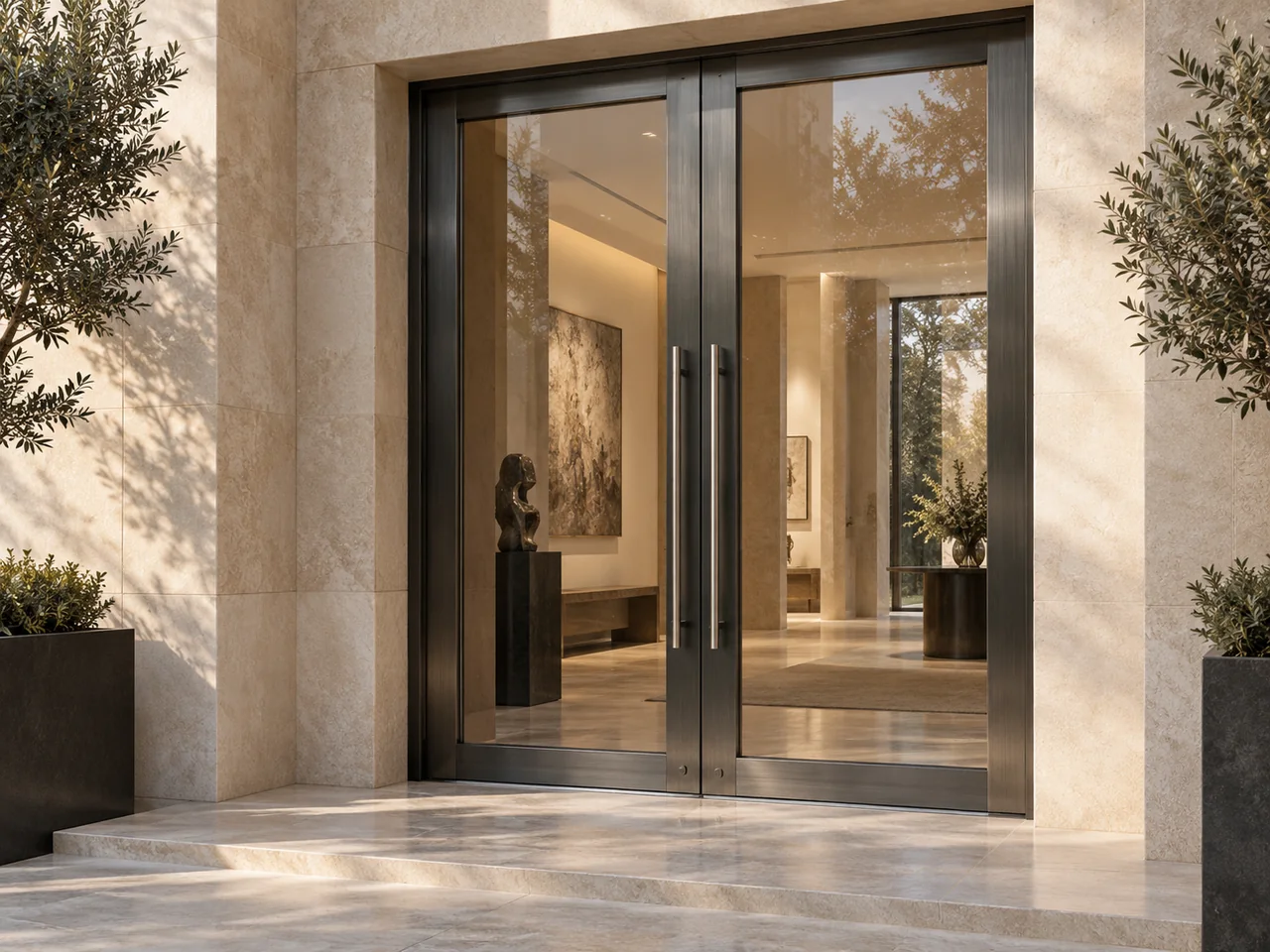 Concept Rendering
Custom Stainless Steel Doors
Architectural door concepts coordinated with the frame, hardware and project requirements.
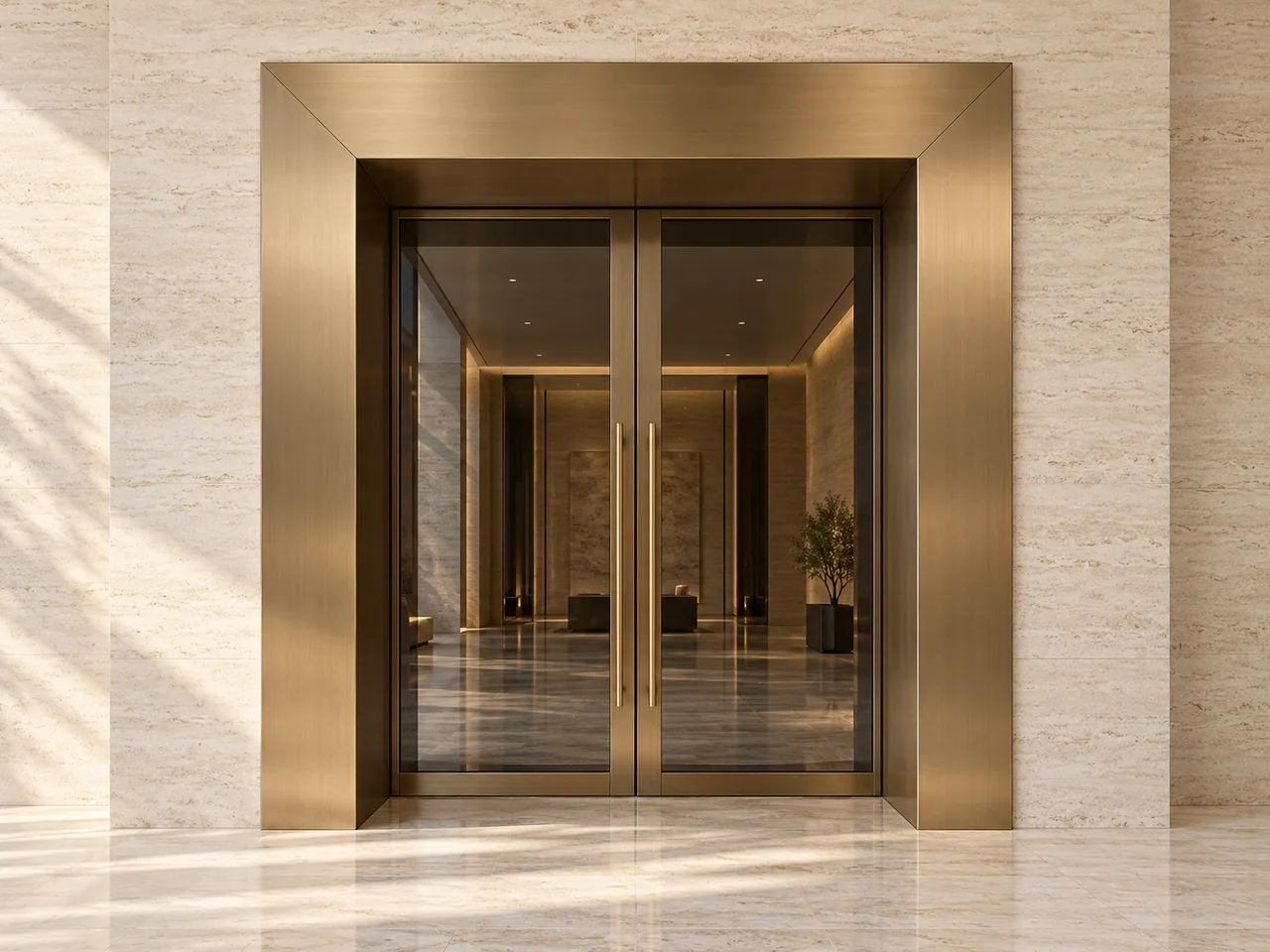 Concept Rendering
Bronze & Gold Stainless Steel Door Surrounds
Warm-toned portal and doorway surround concepts with coordinated head and jamb details.
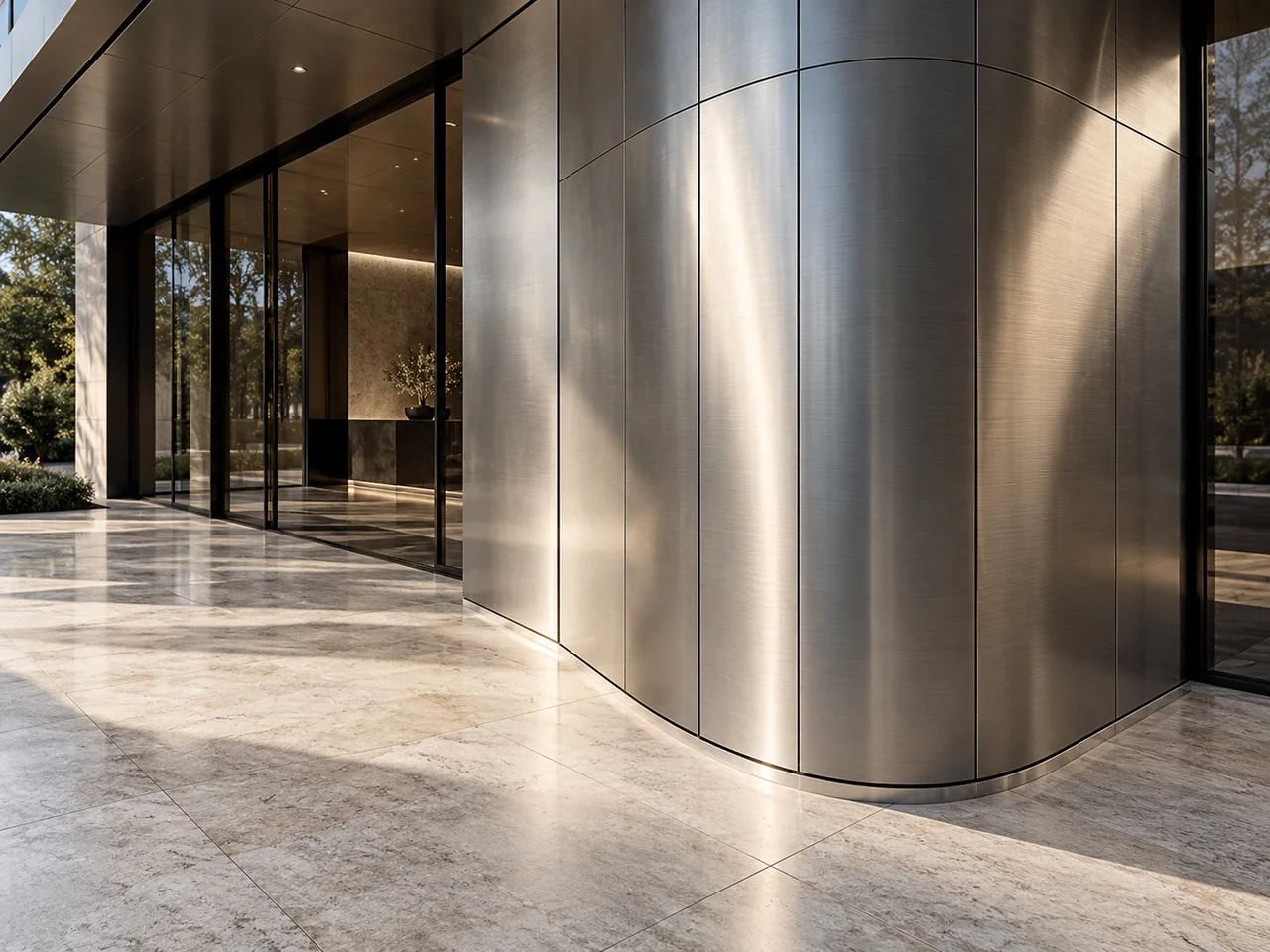 Concept Rendering
Architectural Stainless Steel Cladding
Folded panels, column covers and entrance-facing concepts developed around the substrate.
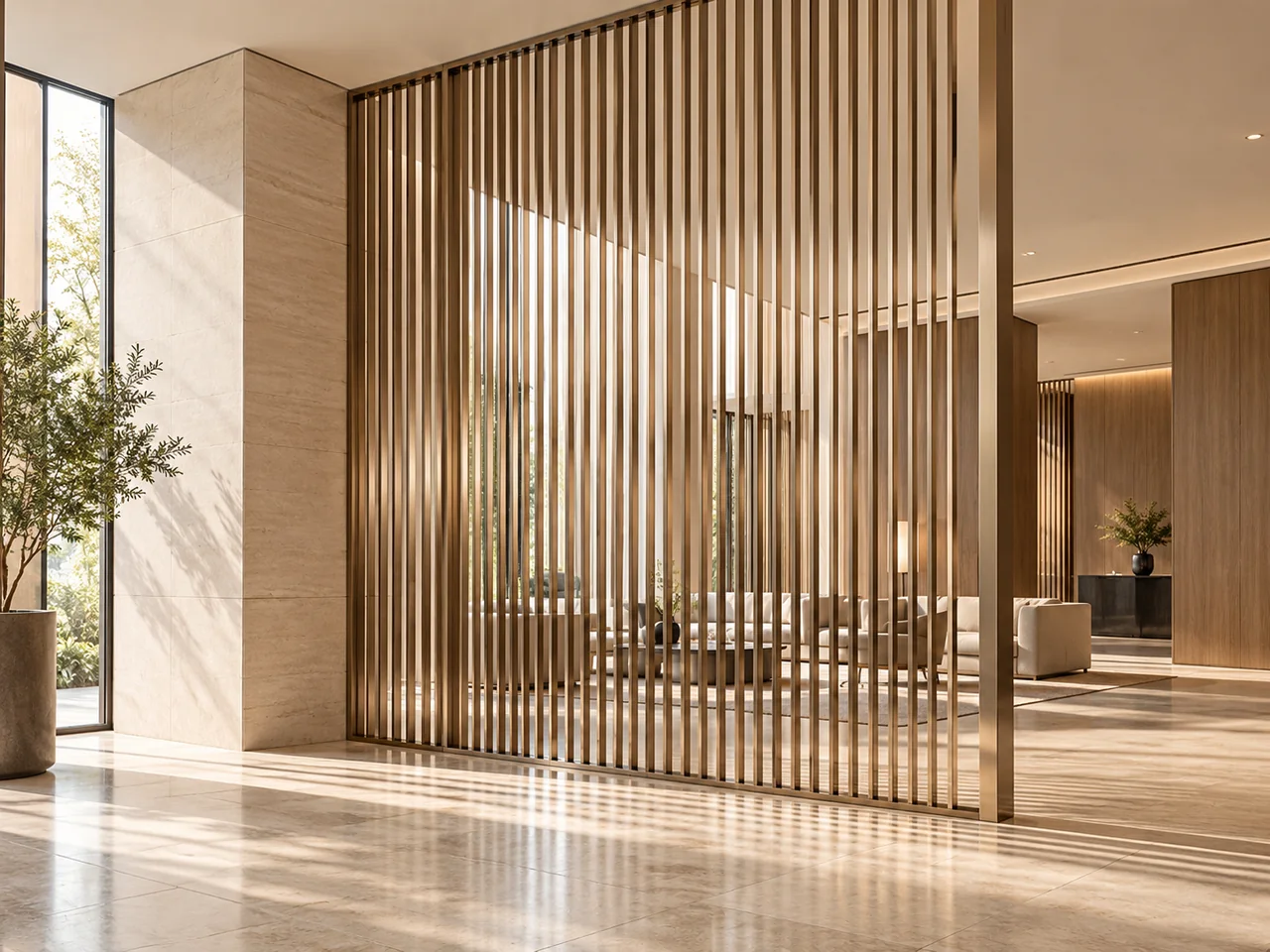 Concept Rendering
Decorative Stainless Steel Screens
Linear and patterned partition concepts for visual screening and interior space definition.
Concept Renderings · Original design illustrations, not manufactured product photographs or a verified stock catalogue.
Questions, answered.
How do I choose between a frame, trim and surround?
Use a frame where the door assembly interfaces with the wall and hardware. Use trims for decorative edges and surrounds for a broader visual portal. Confirm each component’s function in the project specification.
Are these standard stock products?
The collections organise custom project enquiries. Stock dimensions, minimum quantities, manufacturing capacity and lead times are not represented as confirmed on this preview.
A frame, a trim
or a surround?
Begin with the component’s function. Similar-looking doorway details can have different supply and installation responsibilities.
Decorative facing does not replace a functioning frame or evidence for a required rated assembly. Follow the collection links to prepare the appropriate brief.
| Component | Primary role | What to provide |
|---|---|---|
| Door frame | Interfaces with the door leaf, hardware and wall construction. | Opening and wall sections, door leaf and hardware schedule, anchorage and any required assembly evidence. |
| Door trim | Forms a decorative edge or architrave at adjoining finishes. | Face width, folded returns, corner details, finished wall build-up and operational clearances. |
| Door surround | Creates a broader decorative portal around an opening. | Portal layout, returns, joints, supporting construction and an agreed physical finish sample. |
| Frame cladding | Provides decorative facing over an existing frame or supporting assembly. | Existing condition and dimensions, attachment details, clearances and any rated-assembly restrictions. |
Confirm each component’s role and the included supply scope in the accepted project documents.
Ask the questions
that define the order.
A useful commercial offer connects the drawings, finish and quantities with the actual supply arrangement. These questions help make proposals easier to compare.
Prepare a project enquiryHow are minimum quantities and lead times confirmed?
Send the item schedule, dimensions, finish and required delivery date. Minimum quantities and production timing need written confirmation after scope and availability review. No fixed MOQ or delivery promise is published here.
What is needed for an international project quotation?
Include the delivery country and destination, quantities, drawing references, requested supply scope and target programme. Ask the quotation to identify packing, transport responsibilities and any agreed trade term. Service availability and costs require written confirmation.
How can I verify the manufacturer and supply arrangement?
Ask the written offer to identify the supplying entity, fabrication arrangement and relevant material or assembly evidence. A brand name or concept image does not establish factory ownership. Do not assume that every illustrated component comes from an owned factory.
What should be agreed before ordering?
Confirm accepted drawings, material and finish, a physical control sample, quantities, included and excluded components, packing, delivery responsibilities and acceptance requirements. Obtain the evidence for any required performance before agreeing the order.
For material questions, review the 304 and 316 selection notes before completing your brief.
Let’s give your
vision a material form.
Bring your dimensions, finish direction and project requirements together in one clear brief.
Request a QuoteBusiness enquiries: info@hecostech.com. Form availability is shown on Contact.